


CSSLP study dumps were so comprehensive and easy to understand that I passed the CSSLPexam with flying colors on my first attempt. So joyful!
 Dave
Dave 


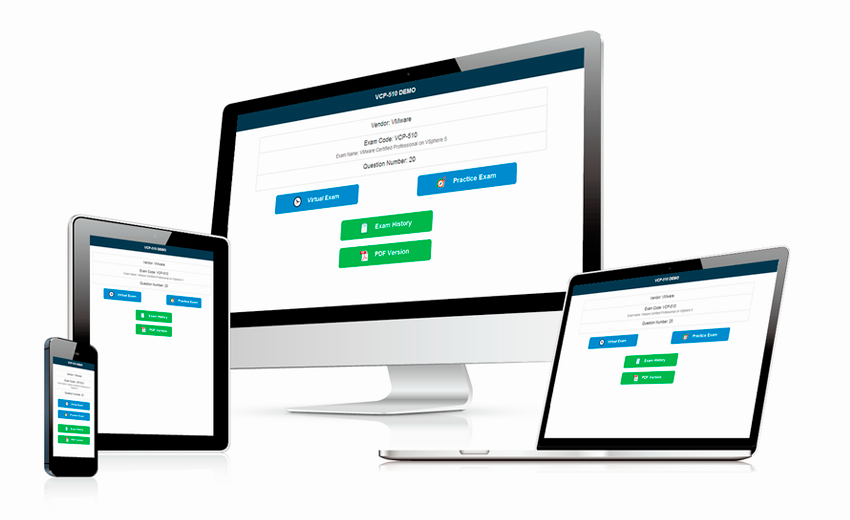
Online Test Engine supports Windows / Mac / Android / iOS, etc., because it is the software based on WEB browser.

Our education elites have been dedicated to compile the high efficiency CSSLP study guide files for many years and they focus their attention on editing all core materials and information into our products. Please rest assured to regard us as the helpful helper which offers the most efficient CSSLP certification dumps for you. We are constantly improving ourselves be stronger and stronger so the quality of our CSSLP practice test questions are always imitated but never be surpassed. Our ISC CSSLP study guide files speak louder than words as the leading position in this field. Besides, we provide satisfying after-sales service which is available for you convenience 24/7 the whole year. We believe that you can pass exam certainly with our CSSLP practice test questions.
To all exam users who aim to clear exam and hope to choose the suitable preparation materials for ISC CSSLP exam, maybe it is hard to make a decision while facing so many different materials on the internet. There are so many various & similar questions filled with the market and you may get confused about which is the most helpful one for you. Our CSSLP certification dumps not only have various advantages to help you clear exam successfully but can interest you to receive and study core knowledge. So we introduce you some advantage of different aspects of our CSSLP study guide files for your reference.

The passing rate of our CSSLP PDF dumps questions is increasing to 98%-100%, so you may know that our exam materials are so useful, will they be expensive? No. Actually, our CSSLP certification dumps are cost-efficient and affordable for most examinees. Comparing to the exam fees, it is really cheap. In consideration of high exam cost and good certification benefits, it is really a good deal to spend little money on valid ISC CSSLP study guide files which can help you clear exam for sure. So why are you still hesitating? Only you attach close attention on the contest of CSSLP practice test questions which is high accuracy and high efficiency, you will find it is valid to prepare efficiently and clear exam successfully.
After purchase, Instant Download: Upon successful payment, Our systems will automatically send the product you have purchased to your mailbox by email. (If not received within 12 hours, please contact us. Note: don't forget to check your spam.)
Those individuals pursuing the (ISC)2 CSSLP certification must have at least 4 years of cumulative and full-time work experience as a Software Development Lifecycle Professional. They must have practical experience in at least one of the eight domains of the CSSLP Common Book of Knowledge. The applicants with a four-year degree in the Information Technology, computer science, or other related fields with three years of full-time work experience in at least one of the eight domains can also opt for this certificate. Those candidates who do not possess this work experience can proceed to take the prerequisite exam and earn the Associate of (ISC)2 certification. They can gain the prerequisite years of experience within five years after obtaining this associate-level option to upgrade to CSSLP.
For more info visit: CSSLP Exam Reference
| Topic | Details |
|---|---|
Secure Software Concepts - 10% | |
| Core Concepts | - Confidentiality (e.g., covert, overt, encryption) - Integrity (e.g., hashing, digital signatures, code signing, reliability, modifications, authenticity) - Availability (e.g., redundancy, replication, clustering, scalability, resiliency) - Authentication (e.g., multifactor authentication (MFA), identity & access management (IAM), single sign-on (SSO), federated identity) - Authorization (e.g., access controls, permissions, entitlements) - Accountability (e.g., auditing, logging) - Nonrepudiation (e.g., digital signatures, block chain) |
| Security Design Principles | - Least privilege (e.g., access control, need-to-know, run-time privileges) - Separation of duties (e.g., multi-party control, secret sharing and split knowledge) - Defense in depth (e.g., layered controls, input validation, security zones) - Resiliency (e.g., fail safe, fail secure, no Single Point of Failure (SPOF)) - Economy of mechanism (e.g., Single Sign-On (SSO), password vaults, resource) - Complete mediation (e.g., cookie management, session management, caching of credentials) - Open design (e.g., Kerckhoffs's principle) - Least common mechanism (e.g., compartmentalization/isolation, white-listing) - Psychological acceptability (e.g., password complexity, screen layouts, Completely Automated Public Turing test to tell Computers and Humans Apart (CAPTCHA), biometrics) - Component reuse (e.g., common controls, libraries) - Diversity of defense (e.g., geographical diversity, technical diversity, distributed systems) |
Secure Software Requirements - 14% | |
| Define Software Security Requirements | - Functional (e.g., business requirements, use cases, stories) - Non-functional (e.g., operational, deployment, systemic qualities) |
| Identify and Analyze Compliance Requirements | |
| Identify and Analyze Data Classification Requirements | - Data ownership (e.g., data owner, data custodian) - Labeling (e.g., sensitivity, impact) - Types of data (e.g., structured, unstructured data) - Data life-cycle (e.g., generation, retention, disposal) |
| Identify and Analyze Privacy Requirements | - Data anonymization - User consent - Disposition (e.g., right to be forgotten) - Data retention - Cross borders (e.g., data residency, jurisdiction, multi-national data processing boundaries) |
| Develop Misuse and Abuse Cases | |
| Develop Security Requirement Traceability Matrix (STRM) | |
| Ensure Security Requirements Flow Down to Suppliers/Providers | |
Secure Software Architecture and Design - 14% | |
| Perform Threat Modeling | - Understand common threats (e.g., Advance Persistent Threat (APT), insider threat, common malware, third-party/supplier) - Attack surface evaluation - Threat intelligence (e.g., Identify credible relevant threats) |
| Define the Security Architecture | - Security control identification and prioritization - Distributed computing (e.g., client server, peer-to-peer (P2P), message queuing) - Service-oriented architecture (SOA) (e.g., Enterprise Service Bus (ESB), web services) - Rich internet applications (e.g., client-side exploits or threats, remote code execution, constant connectivity) - Pervasive/ubiquitous computing (e.g., Internet of Things (IoT), wireless, location-based, Radio-Frequency Identification (RFID), near field communication, sensor networks) - Embedded (e.g., secure update, Field-Programmable Gate Array (FPGA) security features, microcontroller security) - Cloud architectures (e.g., Software as a Service (SaaS), Platform as a Service (PaaS), Infrastructure as a Service (IaaS)) - Mobile applications (e.g., implicit data collection privacy) - Hardware platform concerns (e.g., side-channel mitigation, speculative execution mitigation, embedded Hardware Security Modules (HSM)) - Cognitive computing (e.g., Machine Learning (ML), Artificial Intelligence (AI)) - Control systems (e.g., industrial, medical, facility-related, automotive) |
| Performing Secure Interface Design | - Security management interfaces, Out-of-Band (OOB) management, log interfaces - Upstream/downstream dependencies (e.g., key and data sharing between apps) - Protocol design choices (e.g., Application Programming Interface (APIs), weaknesses, state, models) |
| Performing Architectural Risk Assessment | |
| Model (Non-Functional) Security Properties and Constraints | |
| Model and Classify Data | |
| Evaluate and Select Reusable Secure Design | - Credential management (e.g., X.509 and Single Sign-On (SSO)) - Flow control (e.g., proxies, firewalls, protocols, queuing) - Data loss prevention (DLP) - Virtualization (e.g., software defined infrastructure, hypervisor, containers) - Trusted computing (e.g., Trusted Platform Module (TPM), Trusted Computing Base (TCB)) - Database security (e.g., encryption, triggers, views, privilege management) - Programming language environment (e.g., Common Language Runtime (CLR), Java Virtual Machine (JVM)) - Operating System (OS) controls and services - Secure backup and restoration planning - Secure data retention, retrieval, and destruction |
| Perform Security Architecture and Design Review | |
| Define Secure Operational Architecture (e.g., deployment topology, operational interfaces) | |
| Use Secure Architecture and Design Principles, Patterns, and Tools | |
Secure Software Implementation - 14% | |
| Adhere to Relevant Secure Coding Practices (e.g., standards, guidelines and regulations) | - Declarative versus imperative (programmatic) security - Concurrency (e.g., thread safety, database concurrency controls) - Output sanitization (e.g., encoding, obfuscation) - Error and exception handling - Input validation - Secure logging & auditing - Session management - Trusted/Untrusted Application Programming Interface (APIs), and libraries - Type safety - Resource management (e.g., compute, storage, network, memory management) - Secure configuration management (e.g., parameter, default options, credentials) - Tokenizing - Isolation (e.g., sandboxing, virtualization, containers, Separation Kernel Protection Profiles (SKPP)) - Cryptography (e.g., payload, field level, transport, storage, agility, encryption, algorithm selection) - Access control (e.g., trust zones, function permissions, Role Based Access Control (RBAC)) - Processor microarchitecture security extensions (e.g., Software Guard Extensions (SGX), Advanced Micro Devices (AMD) Secure Memory Encryption(SME)/Secure Encrypted Virtualization(SEV), ARM TrustZone) |
| Analyze Code for Security Risks | - Secure code reuse - Vulnerability databases/lists (e.g., Open Web Application Security Project (OWASP) Top 10, Common Weakness Enumeration (CWE)) - Static Application Security Testing (SAST) (e.g., automated code coverage, linting) - Dynamic Application Security Testing (DAST) - Manual code review (e.g., individual, peer) - Look for malicious code (e.g., backdoors, logic bombs, high entropy) - Interactive Application Security Testing (IAST) |
| Implement Security Controls (e.g., watchdogs, File Integrity Monitoring (FIM), anti-malware) | |
| Address Security Risks (e.g. remediation, mitigation, transfer, accept) | |
| Securely Reuse Third-Party Code or Libraries (e.g., Software Composition Analysis (SCA)) | |
| Securely Integrate Components | - Systems-of-systems integration (e.g., trust contracts, security testing and analysis) |
| Apply Security During the Build Process | - Anti-tampering techniques (e.g., code signing, obfuscation) - Compiler switches - Address compiler warnings |
Secure Software Testing - 14% | |
| Develop Security Test Cases | - Attack surface validation - Penetration tests - Fuzzing (e.g., generated, mutated) - Scanning (e.g., vulnerability, content, privacy) - Simulation (e.g., simulating production environment and production data, synthetic workloads) - Failure (e.g., fault injection, stress testing, break testing) - Cryptographic validation (e.g., Pseudo-Random Number Generator (PRNG), entropy) - Regression tests - Integration tests - Continuous (e.g., synthetic transactions) |
| Develop Security Testing Strategy and Plan | - Functional security testing (e.g., logic) - Nonfunctional security testing (e.g., reliability, performance, scalability) - Testing techniques (e.g., white box and black box) - Environment (e.g., interoperability, test harness) - Standards (e.g., International Organization for Standardization (ISO), Open Source Security Testing Methodology Manual (OSSTMM), Software Engineering Institute (SEI)) - Crowd sourcing (e.g., bug bounty) |
| Verify and Validate Documentation (e.g., installation and setup instructions, error messages, user guides, release notes) | |
| Identify Undocumented Functionality | |
| Analyze Security Implications of Test Results (e.g., impact on product management, prioritization, break build criteria) | |
| Classify and Track Security Errors | - Bug tracking (e.g., defects, errors and vulnerabilities) - Risk Scoring (e.g., Common Vulnerability Scoring System (CVSS)) |
| Secure Test Data | - Generate test data (e.g., referential integrity, statistical quality, production representative) - Reuse of production data (e.g., obfuscation, sanitization, anonymization, tokenization, data aggregation mitigation) |
| Perform Verification and Validation Testing | |
Secure Software Lifecycle Management - 11% | |
| Secure Configuration and Version Control (e.g., hardware, software, documentation, interfaces, patching) | |
| Define Strategy and Roadmap | |
| Manage Security Within a Software Development Methodology | - Security in adaptive methodologies (e.g., Agile methodologies) - Security in predictive methodologies (e.g., Waterfall) |
| Identify Security Standards and Frameworks | |
| Define and Develop Security Documentation | |
| Develop Security Metrics (e.g., defects per line of code, criticality level, average remediation time, complexity) | |
| Decommission Software | - End of life policies (e.g., credential removal, configuration removal, license cancellation, archiving) - Data disposition (e.g., retention, destruction, dependencies) |
| Report Security Status (e.g., reports, dashboards, feedback loops) | |
| Incorporate Integrated Risk Management (IRM) | - Regulations and compliance - Legal (e.g., intellectual property, breach notification) - Standards and guidelines (e.g., International Organization for Standardization (ISO), Payment Card Industry (PCI), National Institute of Standards and Technology (NIST), OWASP, Software Assurance Forum for Excellence in Code (SAFECode), Software Assurance Maturity Model (SAMM), Building Security In Maturity Model (BSIMM)) - Risk management (e.g., mitigate, accept, transfer, avoid) - Terminology (e.g., threats, vulnerability, residual risk, controls, probability, impact) - Technical risk vs. business risk |
| Promote Security Culture in Software Development | - Security champions - Security education and guidance |
| Implement Continuous Improvement (e.g., retrospective, lessons learned) | |
Secure Software Deployment, Operations, Maintenance - 12% | |
| Perform Operational Risk Analysis | - Deployment environment - Personnel training (e.g., administrators vs. users) - Safety criticality - System integration |
| Release Software Securely | - Secure Continuous Integration and Continuous Delivery (CI/CD) pipeline - Secure software tool chain - Build artifact verification (e.g., code signing, checksums, hashes) |
| Securely Store and Manage Security Data | - Credentials - Secrets - Keys/certificates - Configurations |
| Ensure Secure Installation | - Bootstrapping (e.g., key generation, access, management) - Least privilege - Environment hardening - Secure activation (e.g., credentials, white listing, device configuration, network configuration, licensing) - Security policy implementation - Secrets injection (e.g., certificate, Open Authorization (OAUTH) tokens, Secure Shell (SSH) keys) |
| Perform Post-Deployment Security Testing | |
| Obtain Security Approval to Operate (e.g., risk acceptance, sign-off at appropriate level) | |
| Perform Information Security Continuous Monitoring (ISCM) | - Collect and analyze security observable data (e.g., logs, events, telemetry, and trace data) - Threat intel - Intrusion detection/response - Secure configuration - Regulation changes |
| Support Incident Response | - Root cause analysis - Incident triage - Forensics |
| Perform Patch Management (e.g. secure release, testing) | |
| Perform Vulnerability Management (e.g., scanning, tracking, triaging) | |
| Runtime Protection (e.g., Runtime Application Self-Protection (RASP), Web Application Firewall (WAF), Address Space Layout Randomization (ASLR)) | |
| Support Continuity of Operations | - Backup, archiving, retention - Disaster recovery (DR) - Resiliency (e.g., operational redundancy, erasure code, survivability) |
| Integrate Service Level Objectives (SLO) and Service Level Agreements (SLA) (e.g., maintenance, performance, availability, qualified personnel) | |
Secure Software Supply Chain - 11% | |
| Implement Software Supply Chain Risk Management | - Identify - Assess - Respond - Monitor |
| Analyze Security of Third-Party Software | |
| Verify Pedigree and Provenance | - Secure transfer (e.g., interdiction mitigation) - System sharing/interconnections - Code repository security - Build environment security - Cryptographically-hashed, digitally-signed components - Right to audit |
| Ensure Supplier Security Requirements in the Acquisition Process | - Audit of security policy compliance (e.g., secure software development practices) - Vulnerability/incident notification, response, coordination, and reporting - Maintenance and support structure (e.g., community versus commercial, licensing) - Security track record |
| Support contractual requirements (e.g., Intellectual Property (IP) ownership, code escrow, liability, warranty, End-User License Agreement (EULA), Service Level Agreements (SLA)) | |
In consideration of the various requirements of our customers we develop three different versions of ISC CSSLP practice test questions (PDF version, PC test engine and APP test engine) for you reference. Different formats have different features & advantages, but you can choose any version or the package version of CSSLP certification dumps as three versions have same questions and answers. The PC test engine & APP test engine of CSSLP study guide files has the impeccable simulation function for your exam. The APP version of CSSLP practice test questions can be installed & downloaded on your phone. You just need download the content of ISC CSSLP certification dumps you wanted, and then you can study it whenever, even you are on offline state.
Certified Information Systems Security Professional (CISSP Deutsch Version)
Certified Information Systems Security Professional (CISSP Korean Version)
Information Systems Security Architecture Professional
ISSMP:Information Systems Security Management Professional
Information Systems Security Engineering Professional Practice Test
CAP - Certified Authorization Professional (CAP日本語版)
System Security Certified Practitioner (SSCP)
Certified Information Systems Security Professional (CISSP)
Certified Information Systems Security Professional (CISSP日本語版)
Certified Secure Software Lifecycle Professional Practice Test
Over 58263+ Satisfied Customers
CSSLP study dumps were so comprehensive and easy to understand that I passed the CSSLPexam with flying colors on my first attempt. So joyful!
Dave
I have just passed my CSSLP exam.
 Tracy
Tracy
I would like to suggest ExamDumpsVCE exam preparation material for CSSLP certification exam. I studied from these pdf question answers and it prepared me very well. I was able to get excellent marks in the exam.
 Hazel
Hazel
I've every reason to be grateful to ExamDumpsVCE 's amazing questions and answers based Study Guide that brought toCleared my long awaited CSSLP certification at last!
marvelous success in exam
 Athena
Yes, these CSSLP practice dumps are valid and accurate. I just passed my CSSLP exam today. Thanks so much!
 Lester
I really had no confidence to write this CSSLP exam.
 Humphrey
I love ExamDumpsVCE because when I studies for CSSLP exam using the products provided, I realized that it was made just for me. The questions and answers for CSSLP exam are compiled by experts and are very similar to the actual ones on the exam.
 Fitch
Fitch 
Your CSSLP exam dumps are the real questions.
 Heather
I would recommend the CSSLP exam file for anyone preparing to take the exam. The questions are all valid and enough to pass. Good luck!
 Dick
Dick
I must advise CSSLP test papers to all those who still want to pass their CSSLP exam with splendid
marks.
 Elva
Elva
Even there were 4 new questions, I still passed CSSLP exam with a nice score. Good CSSLP exam materials!
 Roberta
Just Passed my CSSLP Exam with 96% marks. I love ExamDumpsVCE Dumps
 Vera
Vera
But it seems that some of your answers are incorrect.
 Lesley
This CSSLP exam braindump leads to the CSSLP certification. You can rely on it and get yours as well.
 Mag
Mag
I can use these CSSLP learning questions to check if I am ready for the exam. They are helpful and valid. I passed my CSSLP exam highly.
 Bevis
Bevis
ExamDumpsVCE Practice Exams are written to the highest standards of technical accuracy, using only certified subject matter experts and published authors for development - no all study materials.
We are committed to the process of vendor and third party approvals. We believe professionals and executives alike deserve the confidence of quality coverage these authorizations provide.
If you prepare for the exams using our ExamDumpsVCE testing engine, It is easy to succeed for all certifications in the first attempt. You don't have to deal with all dumps or any free torrent / rapidshare all stuff.
ExamDumpsVCE offers free demo of each product. You can check out the interface, question quality and usability of our practice exams before you decide to buy.


ExamDumpsVCE not only provides professional valid VCE files but also golden customer service. 99.54% passing rate will help most users pass exams easily if users pay highly attention on our stable dumps VCE and reliable exam dumps.
Copyright © 2026 ExamDumpsVCE NETWORK CO.,LIMITED. All Rights Reserved. All trademarks used are properties of their respective owners. Privacy Policy
